
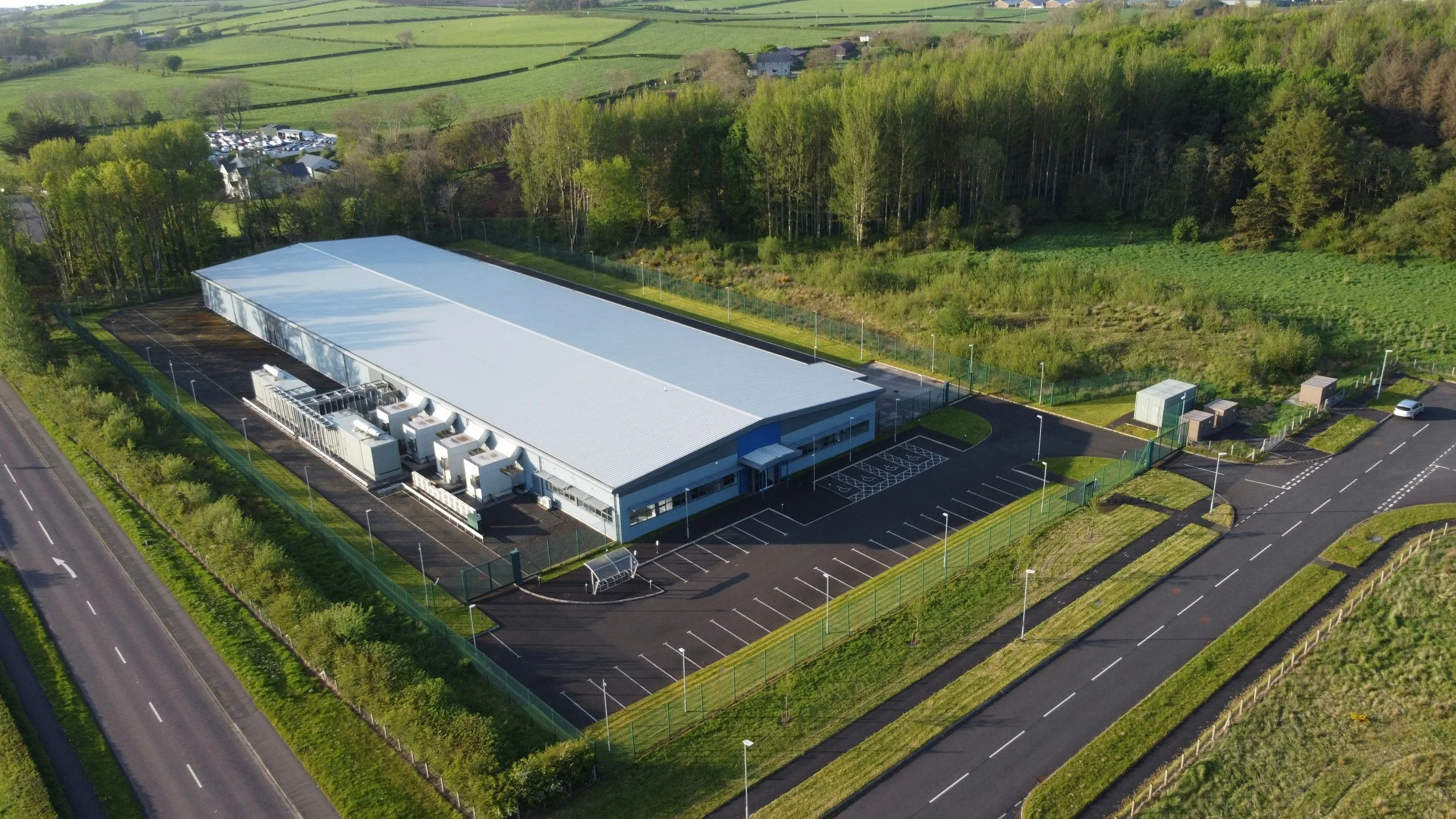
Data Center in Coleraine, Northern Ireland. Photo Credit: Geoffrey Moffett
The race to build AI infrastructure is moving fast. Data centers have become a cornerstone of the digital economy, contributing an estimated $927 billion to U.S. GDP in 2024, according to PwC. More companies are entering the AI economy and the demand for it is skyrocketing. That means more memory, more chips, more energy, and more data centers.
Companies tend to naturally focus data center conversations on availability of land, power, supply chains, and capital. Those are all critical. But another factor has increasingly determined whether projects move forward: community.
New York recently initiated the nation's first statewide moratorium on new hyperscale data centers, underscoring just how central community concerns have become to the future of AI infrastructure. New York may not be the exception for long.
The question for business leaders is no longer only, "Where can we build?" The question is also, "How do we build in a way that communities support?"
At Raya Cooper Impact Consulting, we believe answering that question starts with recognizing that while AI infrastructure is global, every data center's impact is local. As Brookings Institution notes, the data center may be national in scale, but its benefits, costs, and tradeoffs are experienced hyper-locally by the communities where these facilities are built.
There isn't a universal playbook for community partnership because every community is different. But one thing is becoming clear: community partnership is no longer a downstream communications activity. It is an essential upstream business strategy.
Community Is Becoming Part of the Business Strategy
This shift requires companies to rethink the role of the community itself. When projects encounter resistance, companies often ask, "What should we give to the community?" whereas the more strategic question is, "How do we partner with the community?"
For many businesses, community engagement has traditionally been led through corporate philanthropy or corporate social responsibility, often focused on grants, donations, or employee volunteering after key business decisions have already been made. For data center development, however, community strategy can no longer sit solely within those functions, or as a “nice to have” afterthought. It must become part of the business strategy itself.
“Projects move more successfully when companies engage communities early, communicate clearly, and help demystify how data centers will affect the places where they’re built.”
As community concerns have stalled projects across the country, communities are asking more sophisticated questions than ever before:
How will this project affect our local economy?
What will it mean for our natural resources? And our access to them?
How will it change our quality of life?
What lasting value will remain after construction is complete?
These aren't public relations questions anymore. They're now, in fact, business questions. And answering them requires companies to build with communities, instead of only investing in them.
Building for
Hyper-Local Impact
To do this, we recommend that companies begin with a clear framework and process that identifies the topics and issues that matter most to the communities where they want to build. That framework becomes the foundation for aligning investments, partnerships, and measurement around shared priorities.
Even though every community's priorities will differ, we observe they generally fall into three dimensions of local impact:
Economic: How can investments create lasting economic value beyond Data Center construction?
Environmental: Which environmental issues matter most in this community, and how will those concerns be measured and communicated transparently?
Social: What local priorities – like housing, broadband, or education – can our investments help strengthen now that the data center is here?
Rather than treating these as standalone initiatives, organizations can use this approach to weave together their community investments, partnerships, and reporting to the issues communities care about most. This framework serves as a strategic anchor – equipping companies to connect investments to community needs, define real impact, and cultivate enduring partnerships with the community.
This will require companies to move beyond assumptions and intentionally engage communities before designing solutions. That process may include:
Targeted Stakeholder Mapping to ensure the right voices are included
Community Listening Sessions to surface local priorities, concerns, and opportunities
Advisory & Steering Committees to foster ongoing partner alignment
Continuous Feedback Loops to adapt strategies as community needs evolve
Transparent Impact Measurement& Reporting to demonstrate progress and accountability
Partnership Begins with Understanding
Across recent conversations from Brookings, Duke University's Sanford School of Public Policy, and industry publications like Data Center Frontier, a common theme emerges: Projects move more successfully when companies engage communities early, communicate clearly, and help demystify how data centers will affect the places where they're built.
Partnership starts with understanding – not simply communicating earlier, but building shared understanding earlier. As Data Center Frontier has noted, community resistance is often less about rejecting data centers than about understanding how the data centers will affect local quality of life. That’s why building trust requires translation: translating technical complexity into language communities can understand, while translating community priorities into business strategy.
While there isn't a one-size-fits-all community strategy for data centers, there is a repeatable process for identifying local priorities and building hyper-local strategies around what each community values. Companies that embed this process into how they plan, engage, and invest will be better positioned to earn trust and navigate the next generation of AI infrastructure development.
What Lies Ahead
The companies best positioned to lead in the next decade won't simply be the ones that scale infrastructure the fastest – they will be the ones that scale trust. True competitive advantage will increasingly belong to the companies that understand their communities first and let that insight drive their business strategy from day one.